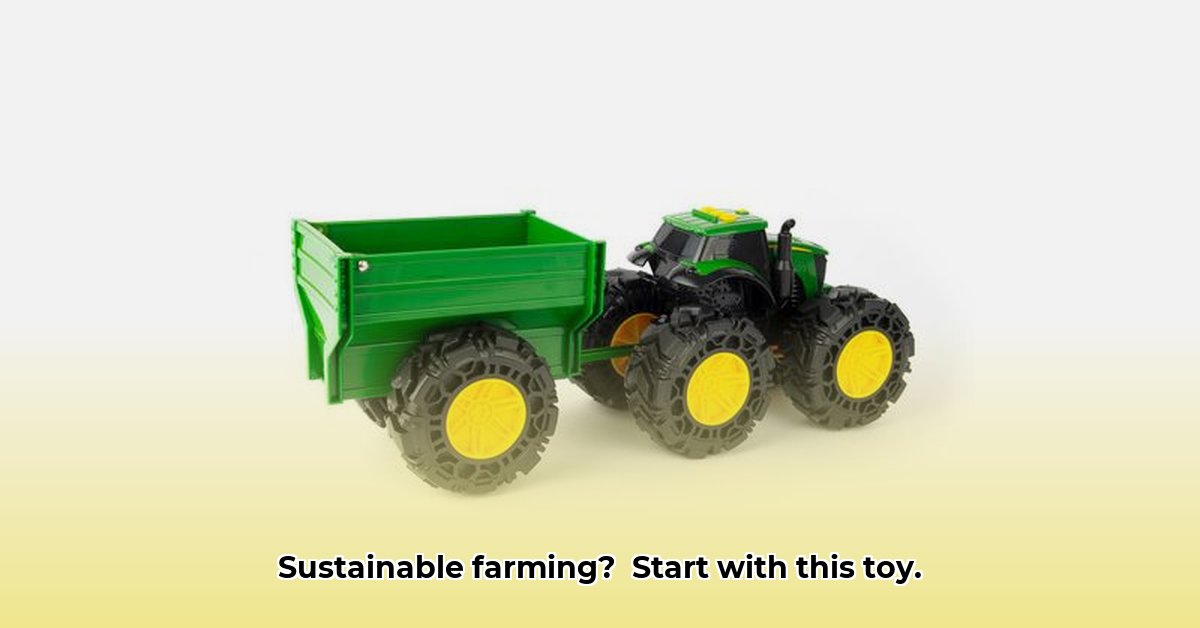
John Deere Tractor Wagon Toy: A Tiny Tractor, Huge Learning Opportunities
More than just a charming toy, the John Deere tractor wagon offers a surprisingly effective gateway to understanding sustainable agriculture. Its bright colors and sturdy design naturally attract children, making it an ideal tool for introducing complex concepts in an engaging way. This isn't just playtime; it's a miniature representation of the vast system that feeds us all, sparking curiosity and fostering a deeper appreciation for farming. For more on John Deere toy tractors, see this helpful site.
Planting the Seeds of Understanding: How This Toy Helps Kids Learn
The John Deere tractor and wagon actively encourage imaginative play, crucial for a child's development. Kids can create narratives around harvesting crops, transporting goods, and even caring for farm animals. This imaginative engagement facilitates learning by doing, helping children process complex ideas through play. Isn't it remarkable how a simple toy can transform into a powerful learning tool?
More Than Just Fun: Introducing Sustainable Farming Concepts
This toy isn't merely about entertainment; it's a catalyst for conversations about vital environmental issues. Using the toy, you can effortlessly introduce important concepts:
Fuel Efficiency: Discuss how real tractors consume fuel and the importance of minimizing fuel usage. Ask questions like: "How can we help the tractor use less fuel?" to encourage critical thinking about resource conservation.
Crop Diversity: Utilizing blocks or small toys to represent diverse fruits and vegetables introduces the concept of crop rotation and its significance in maintaining a healthy ecosystem. Ask your child, "Why is it better to grow many different plants instead of just one type?"
Responsible Resource Management: Explore water conservation and soil health, emphasizing their influence on agricultural practices. These conversations organically foster environmental awareness and a sense of responsibility towards the planet. Did you know that reduced water usage in farming can have a significant positive environmental effect?
Hands-On Activities: Turning Playtime into Learning Time
Transform playtime with the John Deere toy into valuable learning experiences through these simple activities:
Storytelling Adventures: Collaboratively create narratives around a farmer, their tractor, and the challenges they face (drought, pests, etc.). This fosters problem-solving skills and narrative development.
Dramatic Playtime: Encourage imaginative scenarios involving loading and unloading the wagon, mimicking the process of planting, harvesting, and transporting crops. Use everyday items to enhance the experience.
Miniature Field Trip: Create a miniature farm setting outdoors using natural materials. This connects the imaginative play to the real world, making learning interactive and memorable.
Remember, the key is to keep it enjoyable. The objective is to make learning a fun adventure and not a chore.
The John Deere Legacy: More Than Just a Brand
John Deere represents innovation and quality in agriculture. Their commitment to progress stretches from horse-drawn plows to today's advanced machinery. This legacy of excellence, reflected in the toy itself, may inspire the next generation of agricultural innovators. How many children have been inspired by this iconic brand to pursue a career in agriculture?
Beyond Playtime: A Bigger Picture
The John Deere tractor wagon serves as a window into the world of agriculture and its connection to sustainability. It provides opportunities to teach children about responsible farming practices and the critical role agriculture plays in feeding the globe. It's a small toy with a potentially significant impact.
How to Reduce Environmental Impact of John Deere Farm Equipment: A Tiny Tractor's Big Lesson
Key Takeaways:
- John Deere's commitment to sustainability includes substantial reductions in greenhouse gas emissions.
- Precision agriculture technologies like See & Spray™ and ExactShot™ drastically minimize resource usage.
- The future of farming involves electric and hybrid equipment.
- Challenges persist in widespread technology adoption and addressing Scope 3 emissions.
- Learning about sustainable agriculture begins with simple things, such as a toy tractor.
The Little Tractor, Big Ideas
The toy tractor serves as a springboard for conversations about where our food comes from and how farmers cultivate it. It's an opportunity to subtly introduce concepts like fuel efficiency and water conservation. Did you know that even small changes in farming practices can significantly impact the environment?
John Deere: Beyond the Toy
John Deere is actively engaged in minimizing the environmental impact of its farm equipment. The company is heavily investing in technology designed to reduce farming's environmental footprint. Their commitment to sustainability is a testament to their forward-thinking approach.
Precision Farming: Smarter, Greener
Precision agriculture technologies, such as John Deere's See & Spray™ and ExactShot™, utilize cameras and AI to precisely target weeds and fertilizers, significantly reducing chemical usage and environmental impact. These advancements represent a move towards smarter, greener farming practices.
The Power of Electric
John Deere's development of battery-powered tractors demonstrates a commitment to reducing tailpipe emissions, shaping a cleaner farming future. Introducing electric tractors to children opens discussions about clean energy and its role in sustainable practices.
Teaching Through Play
Use the toy to teach children about sustainability through these simple methods:
Fuel Efficiency: Act out scenarios where the toy tractor conserves "fuel," demonstrating the practical implications of fuel-efficient practices.
Crop Diversity: Show images of various crops and explain how crop rotation improves soil health and reduces chemical dependency.
Water Conservation: Emphasize water conservation techniques to ensure responsible agricultural practices.
Responsible Waste Management: Discuss composting and other methods of waste management to highlight eco-friendly soil enrichment strategies.
The Bigger Picture
Despite John Deere's advancements, challenges still exist in widespread technology adoption and fully mitigating environmental impact. Encouraging the adoption of sustainable farming practices is of paramount importance.
A Collaborative Effort
Sustainable agriculture requires collaborative efforts from farmers, manufacturers, governments, and consumers. Let's work together to build a more sustainable future, beginning with simple discussions sparked by a toy tractor.